

Part 2: Understanding Metabolites in Fermented Foods
and Why They are Important to Our Health (Part 2 of 2)

Welcome to the second part of our deep dive into metabolites and specifically the paper Microbial aromatic amino acid metabolism is modifiable in fermented food matrices to promote bioactivity, which was published in the journal Food Chemistry in 2024.
If you want to read this later, the biggest takeaway is we need to eat fermented foods daily because the metabolites they produce are important. And we don’t have to make them ourselves to receive the benefits because they remain relatively stable in the fridge. (If you want an update on our Peru trip, scroll to the Parting Shot.)
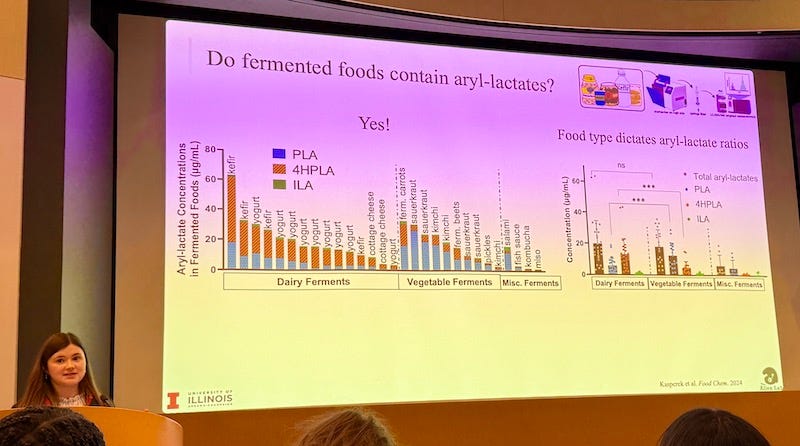
In part 1 we learned about microbial metabolites from aromatic amino acids and their concentrations in a number of commercially available fermented foods, and that while the concentrations of these metabolites varied, they were present in all samples. This would have been a big enough ‘ah-ha’ for me, but the scientists went on to identify what bacteria were present in the foods with high aryl-lactates, which were Lactiplantibacillus plantarum (L. plantarum), then Lactobacillus brevis, and in third place Lacticaseibacillus paracasei, among others.
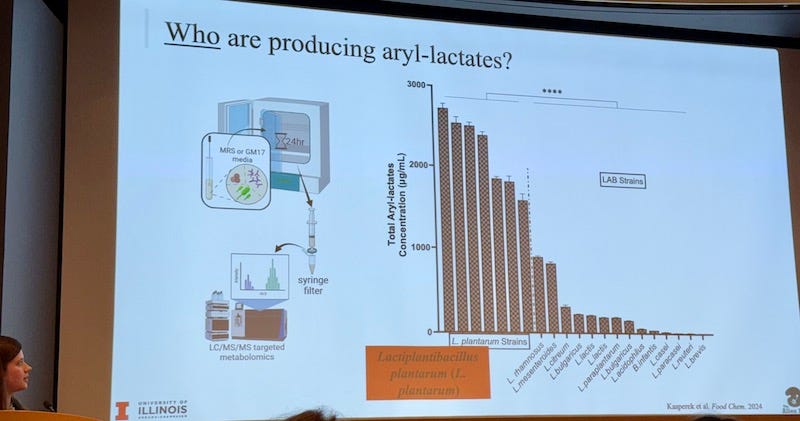
What microbes produce aryl-lactates?
When analyzed, the seven strains of L. plantarum stood out among the additional lactobacillus (LAB) strains for their superpower in producing total aryl-lactates and specifically LAB, the PLA, and ILA. For a refresher PLA, ILA, and upcoming 4 HPLA head back to part 1.) As for 4HPLA, one of the seven strains killed it, but the others in the L. plantarum team just weren’t feeling it, being outpaced by several of the additional LAB strains, including one of our favorites, Bifidobacterium infantis (B. infantis). You might remember this LAB is found, as the name hints, mostly in little guts of babies, especially those that enjoy their mother’s breast milk. The bacteria help the infant’s gut process the sugars in the breast milk, as well as protecting from germs, boosting immunity, etc.
Okay, so we have a list of the super producers, now what?
The scientists next looked at some of the tiny helpers of the enzymes, co-factors, and precursor metabolites, to see what role they play. They looked at molecules that take in nitrogen from one amino acid to another and molecules that help break down these aromatic amino acids. Things are starting to get a little more complex now that the stage has more supporting characters. These co-factors turned out to be helpful, especially for our infant bacteria, where they really kick it up into overdrive. These additional molecules increased the production of aryl-lactates.
Next, the scientists went back to yogurt. They looked at yogurt starter culture after the initial five-hour fermentation, again in one week after cold storage, and then at the four-week mark of cold storage. This was compared to starter cultures with added bacteria and with those co-factors and metabolites we just learned about. Aryl-lactate levels rose from the starter culture numbers with the co-factors and metabolites, but nothing like adding the dynamic duo of L. plantarum and B. infantis, observing increases of one thousand percent in one of the aryl-lactates. Adding those aryl-pyruvates led to the highest production.
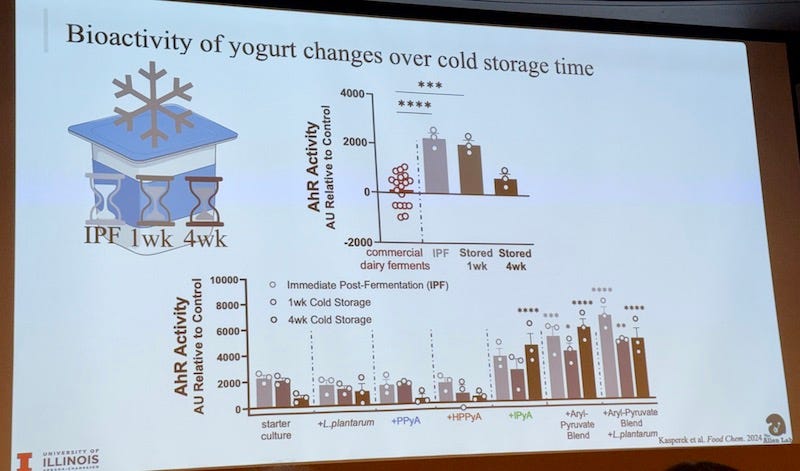
This is good to know, but few of us are eating our yogurt so young, like right after the initial fermentation. The good news is that the metabolites remained at relatively the same levels through the four weeks in cold storage with L. plantarum plus the precursor metabolites did the best job of keeping the aryl-lactates up.
In summary
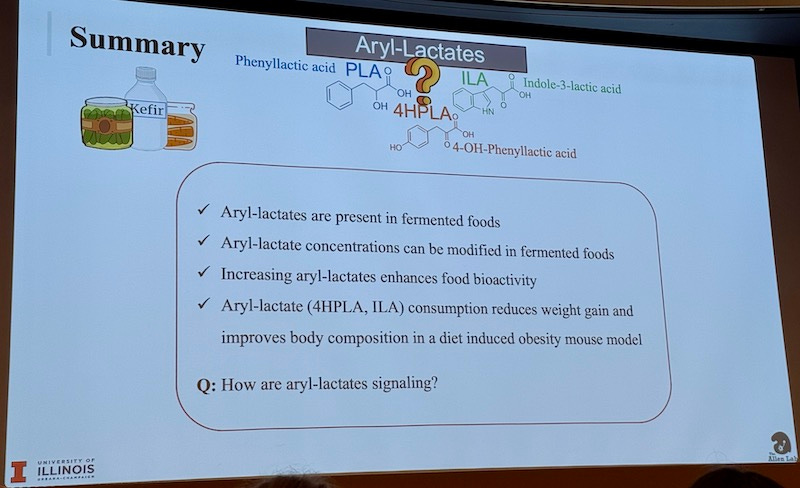
This study is pretty great. They accomplished three big things. They identified aryl-lactate concentrations in a dozen commercial fermented foods, at least a couple of which we hope are in your fridge as you read this. Next, they identified the lactic acid bacteria present in these foods and then focused on the producers of the metabolite of interest. Finally, they looked at supporting characters, co-factors, and precursor metabolites, that encouraged much higher aryl-lactate production. The hope is that research like this will lead to new production processes that target increased production of positive metabolites that benefit our health when consumed. Stay tuned for more research in this area. It’s exciting.
Parting Shot
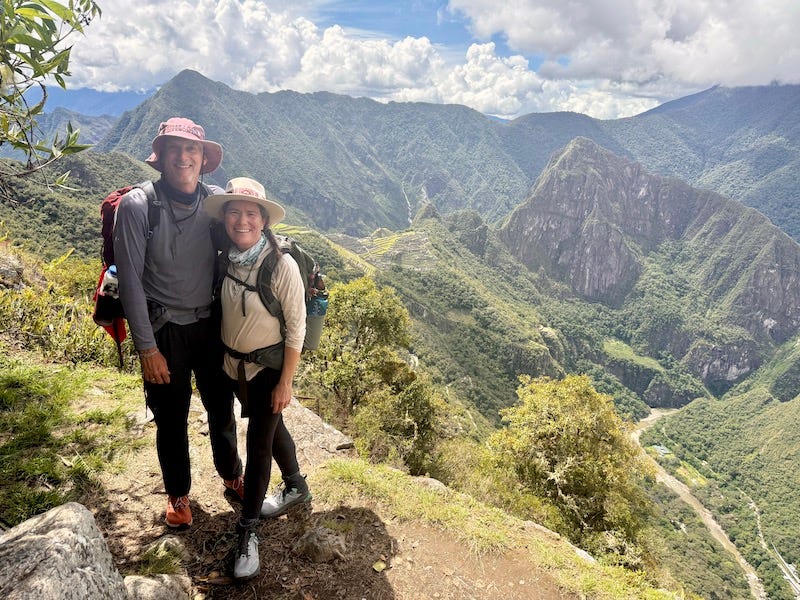
For those of you following along. After teaching fermentation in the Sacred Valley, we embarked on a trek to Machu Picchu along the Inca Trail. After 4 days, approx 26 miles, and around 70,866 stairs (one section alone having around 6,000 stairs over a 4,000-foot ascent.) It was epic. (And we did take fermented foods along…)
Here we are, on the fourth day, right after crossing through the Sun Gate and seeing Machu Picchu for the first time.
Thanks for this Cristopher, encouraged me to dig out the kefir grains at the back of our fridge and start drinking them again!