

Is Black Garlic Fermented?
How it is made, where was it created, why it is tasty and good for you, the week in pictures, and more

Dear Friends,
Here we are June.
Not June the first, but nearing mid-June. 🤯 Are you as surprised as I am?
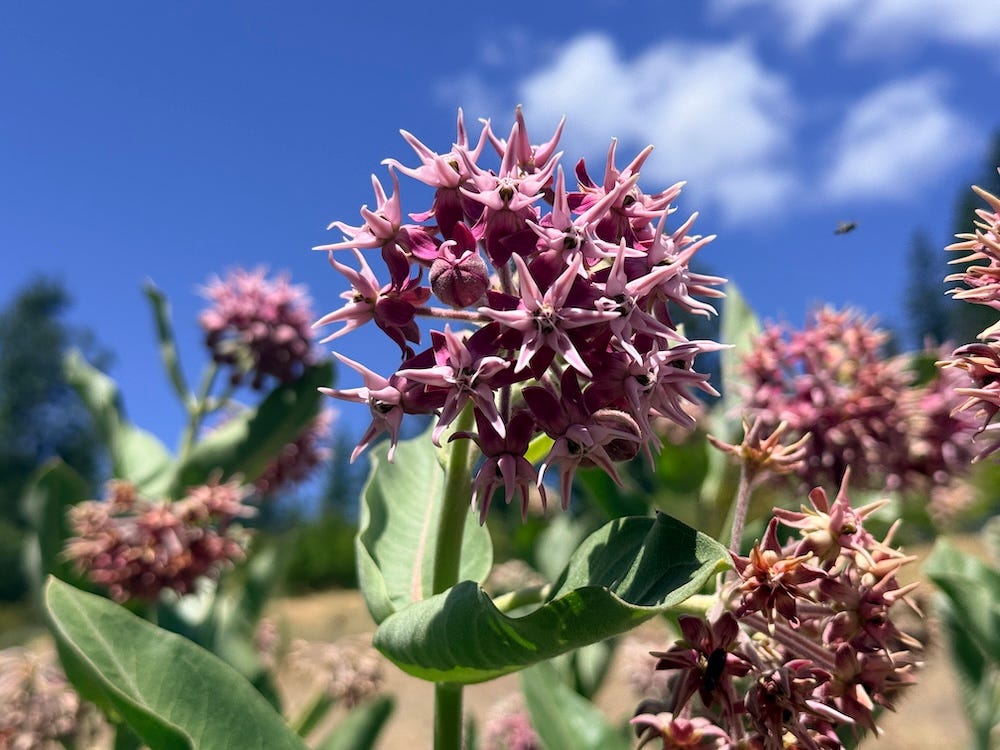
My relationship with summer is, and has always been, complicated, and getting more so all the time. I wilt in the heat. Yet lush green leaves, flowers, and plants are some of my favorite things and delight me. But so far, we have had mild temperatures, so no wilting. I have hardly been inside.


I have spent hours on the work end of an electric string trimmer, planting out all of late summer’s potential meals and ferments (peppers, tomatoes, eggplant, beans, etc.), and “editing hoses.”* Yeah, you read that right—in other words, cutting, splicing, and reconfiguring old hoses to be useful, in moving water to places that need it. This has honestly been the most satisfying activity of the week. Taking leaking and damaged hoses that have been languishing in the barn and giving them life as working water systems feels great, especially because I am imagining all the tiny efficient sprinklers and soaker hoses that are now on timers will save me all that wilting time out in the sun dragging hoses and trying to keep things alive. (We will see…)
*My son’s words


Today’s topic: Black Garlic
This is somewhere between a Dear Fermentista, a Ferment Nerds, and a single ingredient post, as I was inspired by receiving the question “how is black garlic fermented?” Most recently, the person asking was curious if the commercial process is different than the home process, because they read there was heat involved. They were suspect, and rightfully so.
Let’s dive into that.
When people ask me “how is black garlic fermented?” The first thing I have to explain is black garlic is not fermented.
The confusion is natural because black garlic making is a time, patience, and transformation project—much like fermentation. And that transformation is just as delicious and seemingly miraculous as any fermentation.
It is made instead by a very, very slow and low-cooking process under high humidity that causes three chemical reactions through heat in a delicious kitchen chemistry.
This heat is the first hint that black garlic is not fermented because fermentation is microbial-driven transformation—yeast, bacteria, fungus—who all thrive under much cooler temperatures than the slow cooking of black garlic. For comparison, most fermentation takes place within temperatures between around 50°F/10°C to 100 F/43°C(broadly speaking). Black garlic tends to happen in the temperature range of 158°F/70°C to 176°F/80°C—way too hot for our microbe buddies to survive.
Online sources are all over the place on how long you must maintain these temperatures—as in 9 days to 9 months. (Even at 9 days you can see how it can cost so much at such a length of time in a heated chamber.)
